
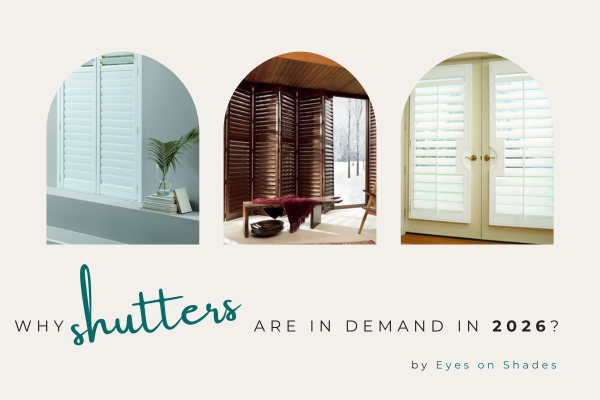
In 2026, the way people think about windows has fundamentally changed. Windows are no longer passive openings that simply let in light. They are active systems that manage energy, security, privacy, comfort, and aesthetics simultaneously. At the center of this shift are shutters. Once viewed as traditional or decorative, shutters have evolved into high-performance components of automated windows, driven by motorized technology and smart-home integration. This evolution is why shutters are not only relevant in 2026 but experiencing renewed demand across residential and commercial markets.
Buyers and homeowners are prioritizing energy efficiency, safety, and automation in ways that were considered premium features just a few years ago. Builders are responding by specifying smarter building envelopes, while interior designers are seeking solutions that balance technology with timeless visual appeal. Shutters uniquely satisfy all of these demands. Unlike blinds or curtains, shutters function as architectural elements while also delivering tangible performance benefits. When motorized, they become part of a fully automated window strategy rather than a standalone accessory.
What makes shutters especially compelling in 2026 is their adaptability. They work in single-family homes, luxury residences, multi-unit developments, offices, and mixed-use buildings. They serve buyers looking for resale value, sellers seeking upgrades that photograph well and appraise higher, and professionals who want durable, future-proof solutions. This article explains exactly why shutters are in demand in 2026, how automated and motorized technologies have transformed them, and why they continue to outperform alternative window treatments.
THE EVOLUTION OF SHUTTERS INTO AUTOMATED WINDOW SYSTEMS
Shutters have undergone one of the most significant transformations of any window treatment category. Historically, shutters were manually operated panels designed for privacy, light control, and protection from weather. In 2026, shutters are increasingly integrated into automated window systems, making them responsive rather than reactive.
Motorized shutters now use compact, quiet electric motors that allow opening and closing at the touch of a button, through voice commands, or via mobile applications. This shift has elevated shutters from static fixtures into dynamic systems that respond to time of day, temperature, sunlight intensity, and occupancy. Automated windows equipped with motorized shutters can adjust themselves without human intervention, optimizing comfort and efficiency throughout the day.
Another major change is integration. Shutters are no longer isolated products. They connect to smart-home ecosystems that include thermostats, lighting, security systems, and energy monitors. For example, shutters can automatically close when indoor temperatures exceed a set threshold or open in the morning to take advantage of natural light and passive heating. This evolution is a key reason shutters remain competitive despite the growth of smart blinds and shades.
For builders and developers, this transformation matters because it aligns shutters with modern building standards. Automated windows with motorized shutters support energy codes, sustainability goals, and buyer expectations. For homeowners, it means shutters are no longer something you manually adjust once a day but a system that works continuously in the background to improve daily living.
WHY MOTORIZED SHUTTERS ARE OUTPACING MANUAL OPTIONS
Motorized shutters have become the standard rather than the exception in many markets. The primary reason is convenience. In larger homes, multi-story buildings, and properties with expansive glazing, manual operation becomes impractical. Motorized shutters eliminate this friction entirely.
With motorized systems, a single control can manage multiple shutters simultaneously. This is particularly valuable for automated windows that span open-plan living areas, high ceilings, or exterior façades. Homeowners can program schedules so shutters open at sunrise, close during peak heat, or secure the home automatically at night. This level of control is simply not possible with manual systems.
Another factor driving demand is accessibility. Motorized shutters make windows usable for people with limited mobility or strength. This has increased their appeal in aging-in-place designs, luxury residences, and universal design projects. Builders and designers see motorized shutters as a way to future-proof homes for long-term usability.
From a resale perspective, motorized shutters signal modernity. Buyers increasingly associate automation with value. A home equipped with automated windows and motorized shutters feels more advanced, more secure, and more efficient. This perception directly impacts buyer interest and time on market, making motorized shutters attractive to sellers preparing properties for sale.
ENERGY EFFICIENCY AND CLIMATE CONTROL BENEFITS
Energy efficiency is one of the strongest drivers behind the demand for shutters in 2026. Shutters create an insulating layer between the window glass and the interior space. When combined with automation, this insulation becomes actively managed rather than static.
Motorized shutters can close during the hottest parts of the day to reduce solar heat gain, lowering air-conditioning demand. In cooler months, they can open to allow sunlight in and close at night to retain heat. Automated windows equipped with shutters respond more intelligently than blinds or curtains because shutters seal more effectively and reduce thermal transfer.
This energy performance is particularly important as energy costs continue to influence housing decisions. Homeowners are seeking solutions that reduce monthly expenses without sacrificing comfort. Builders are using shutters as part of energy-efficient building envelopes that appeal to environmentally conscious buyers.
Interior designers also appreciate that shutters deliver these benefits without compromising aesthetics. Unlike reflective films or heavy drapery, shutters maintain a clean, architectural look while contributing to climate control. In 2026, energy efficiency is no longer hidden behind utility bills; it is visible in the design choices people make, and shutters fit seamlessly into that narrative.
SECURITY, PRIVACY, AND PEACE OF MIND
Security remains a core reason shutters are in demand, especially exterior and rolling shutter systems. Shutters provide a physical barrier that is significantly stronger than blinds or shades. When motorized, they can be deployed instantly, adding an extra layer of protection with minimal effort.
Automated shutters can be programmed to close when homeowners leave the property, creating the appearance of occupancy and reducing vulnerability. Remote access allows users to secure windows even when they are away, which is increasingly important in a world where travel and remote work are common.
Privacy is another critical factor. Shutters block visibility more effectively than many other window coverings. In urban environments, high-density housing, and mixed-use developments, this level of privacy is highly valued. Automated windows with motorized shutters allow privacy to be adjusted dynamically, responding to changing light conditions and activity levels.
For commercial properties and offices, shutters support both security and confidentiality. Meeting rooms, storefronts, and ground-level offices benefit from shutters that can secure spaces after hours while maintaining a professional appearance during the day.
DESIGN FLEXIBILITY AND AESTHETIC VALUE
One of the most overlooked reasons shutters remain in demand is their design versatility. Shutters are not tied to a single style. They work equally well in modern, traditional, coastal, industrial, and transitional interiors. This adaptability makes them a safe yet sophisticated choice for designers and homeowners alike.
Interior shutters add depth and architectural interest to windows. They frame openings rather than covering them, which enhances the perceived quality of a space. Even when open, shutters contribute visually in a way that blinds and shades do not.
In 2026, customization is a major trend. Shutters are available in a wide range of materials, finishes, and configurations, allowing designers to tailor them to specific projects. Motorization does not detract from this customization; it enhances it by removing visible cords and hardware.
Exterior shutters also play a role in curb appeal. They can complement façade materials, add symmetry, and reinforce architectural themes. For sellers, this translates into stronger first impressions. For builders, it means a product that adds value both inside and out.
SMART HOME INTEGRATION AND AUTOMATION TRENDS
Shutters have become a natural component of smart homes. In 2026, automated windows are expected to interact with other systems rather than operate independently. Motorized shutters integrate with voice assistants, home automation platforms, and environmental sensors.
This integration allows shutters to respond to data rather than manual input. For example, shutters can close automatically when sunlight reaches a certain intensity or open when indoor air quality sensors indicate the need for ventilation. This level of responsiveness enhances comfort and efficiency without requiring constant user involvement.
For tech-savvy buyers, this integration is a selling point. Homes that feature automated windows with motorized shutters feel cohesive rather than piecemeal. For builders, it simplifies system design by consolidating window treatments into the broader automation strategy.
Interior designers benefit as well. Automation allows designers to specify clean, minimal solutions without sacrificing functionality. Shutters can be hidden within design concepts while still delivering advanced performance behind the scenes.
COST, VALUE, AND RETURN ON INVESTMENT
While motorized shutters require a higher upfront investment than basic window coverings, their long-term value is a key reason for sustained demand. Shutters are durable and often last for decades, especially when made from high-quality materials. This longevity reduces replacement costs over time.
Energy savings contribute to return on investment. By reducing heating and cooling loads, shutters help lower utility expenses year after year. For homeowners planning to stay in their properties long term, this cumulative savings can be significant.
From a resale perspective, shutters add perceived and actual value. Buyers view them as permanent upgrades rather than disposable accessories. Automated windows equipped with motorized shutters differentiate listings in competitive markets, often justifying higher asking prices or faster sales.
Builders and developers see shutters as a way to elevate projects without resorting to purely cosmetic upgrades. They provide functional benefits that can be marketed effectively, appealing to informed buyers who prioritize performance as much as appearance.
SECTION 8: APPLICATIONS FOR BUYERS, SELLERS, AND PROFESSIONALS
For buyers, shutters represent a move-in-ready solution that enhances comfort, security, and efficiency immediately. Automated windows with motorized shutters reduce the need for post-purchase upgrades, making homes more attractive.
For sellers, shutters are a strategic improvement. They photograph well, signal quality, and address buyer concerns around energy and privacy. Motorized shutters, in particular, communicate modernity and care in property maintenance.
Builders use shutters to meet evolving expectations around smart homes and energy performance. Including automated shutters in new construction aligns projects with current and future market demands.
Interior designers rely on shutters for their timeless appeal and adaptability. They provide control over light and privacy without overwhelming a space, and motorization enhances usability without compromising design integrity.
COMMON QUESTIONS ABOUT SHUTTERS IN 2026
Many homeowners ask whether shutters are still relevant compared to newer technologies. The answer lies in versatility. Shutters combine design, protection, and performance in a way few alternatives can match.
Another common question concerns power outages. Many motorized shutter systems now include battery backups or solar options, ensuring functionality even when grid power is unavailable.
People also ask whether existing shutters can be upgraded. In many cases, manual shutters can be retrofitted with motorized systems, extending their lifespan and bringing them in line with modern expectations without full replacement.
THE FUTURE OF SHUTTERS BEYOND 2026
Looking ahead, shutters are positioned to remain a core component of automated windows. Advances in materials, motor efficiency, and artificial intelligence will continue to enhance their performance. As buildings become smarter and more responsive, shutters will play a key role in managing light, energy, and security.
Sustainability trends also favor shutters. Their durability and energy-saving capabilities align with long-term environmental goals. Rather than disposable products, shutters are investments in building performance.
For all audiences involved in housing and design, shutters represent a balance between tradition and innovation. That balance is exactly why they are in demand in 2026 and why they are likely to remain so for years to come.
WHY SHUTTERS CONTINUE TO WIN IN 2026
Shutters have proven their ability to evolve. In 2026, they are no longer static panels but intelligent, motorized components of automated windows. They deliver convenience, energy efficiency, security, and design value in a single solution, which is why demand continues to grow among buyers, sellers, homeowners, builders, and interior designers.
Motorized shutters meet modern expectations for automation while preserving the timeless qualities that made shutters popular in the first place. They enhance daily living, improve property value, and integrate seamlessly into smart-home ecosystems. Few window treatments can claim such a wide range of benefits.
As housing markets become more competitive and technology-driven, shutters stand out as a smart, future-ready choice. Whether specified in new construction, added during renovations, or highlighted in property listings, shutters remain one of the most effective ways to combine aesthetics with performance.
In 2026, the question is no longer whether shutters are still relevant. The real question is how anyone designing or buying a modern space can afford to overlook them.
