
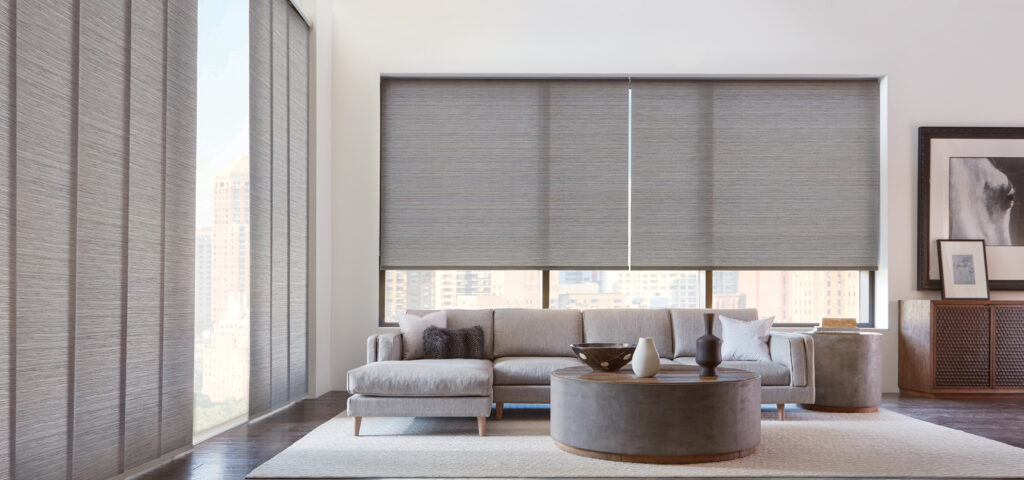
U.S. electricity prices reached 16.26 cents per kWh in 2024, rising 5.1% year over year according to the Energy Information Administration. At the same time, the smart home market hit $36.3 billion in 2023 and is projected to reach $63.2 billion by 2028 (Statista 2024). Windows account for 25–30% of residential heating and cooling energy use, and approximately 30% of HVAC load comes from heat gain and loss through windows (U.S. Department of Energy 2023). These numbers reveal a clear paradox: buildings are becoming smarter, yet uncontrolled solar gain still drives unnecessary energy waste.
For buyers, sellers, developers, and commercial property owners, dual roller shades represent more than a window treatment. They are an architectural control system that intersects energy efficiency, automation adoption, ESG compliance, and real estate value optimization. In 2024, 82% of buyers said they want smart home technology (Coldwell Banker), and 60% are willing to pay more for it (NAR 2023). Meanwhile, commercial buildings consume 18% of total U.S. energy (EIA 2023), and HVAC represents 35% of that load.
This guide explains exactly how Hunter Douglas dual roller shades work, how automation enhances performance, what the energy savings data shows, and why real estate professionals are positioning motorized window systems as ROI-positive upgrades in both residential and commercial markets.
WHAT ARE DUAL ROLLER SHADES AND HOW DO THEY WORK?
Dual roller shades use two independent fabric layers mounted within one headrail system—typically a light-filtering shade paired with a blackout or room-darkening shade. This design allows instant transition between daylight management and privacy control without replacing hardware. The two-layer system enables precision solar control during peak sun exposure while preserving natural light when glare reduction is needed.
Interior shading systems can reduce solar heat gain by up to 65%, while exterior shading can reduce it by up to 77% (DOE 2023). Automated shading systems have demonstrated cooling energy reductions of 10–20% in monitored commercial environments (Lawrence Berkeley National Laboratory 2023). Because solar heat gain through windows can increase cooling costs by approximately 15% (DOE 2023), the dual-layer configuration gives users flexibility to respond dynamically to time-of-day heat load conditions.
How the two-layer system works in real applications:
- Daytime: Light-filtering fabric reduces glare and diffuses sunlight, minimizing solar gain.
- Peak heat hours: Automated deployment of blackout layer increases thermal control.
- Nighttime: Blackout layer enhances insulation and privacy.
In office environments, glare has been shown to reduce worker productivity by approximately 21% (OSHA workplace studies). With 90% of employees seated within 25 feet of a window (Harvard T.H. Chan 2023), effective daylight control directly influences performance. Cornell University research shows daylight exposure can improve productivity by 2–16%, but only when glare is controlled.
Dual roller shades allow operators to balance these competing factors: natural light access and thermal regulation.
WHY AUTOMATION CHANGES EVERYTHING
Automated roller shades transform dual systems into energy-responsive building components. As of 2024, 69% of U.S. households own at least one smart device (Consumer Technology Association), and 43% of smart homeowners use automated lighting or shade controls (Parks Associates 2023). The global smart blinds market is projected to grow at a 10–12% CAGR from 2024 through 2030 (Grand View Research).
Hunter Douglas PowerView Automation integrates with broader smart home ecosystems, allowing scheduling, sensor-triggered adjustments, and whole-home scenes. Automation enables shades to respond to:
- Solar intensity
- Time-of-day programming
- Occupancy sensors
- HVAC load balancing
In commercial buildings, automation connects to centralized building automation systems. The commercial building automation market was valued at $96 billion in 2023 (MarketsandMarkets). With ESG-driven upgrades increasing 14% year over year in 2024 (Deloitte), automated shading is increasingly included in capital improvement planning.
Lawrence Berkeley National Laboratory data confirms automated shading can reduce cooling energy by 10–20%. Given that HVAC accounts for 35% of commercial energy consumption (EIA 2023), even a 10% reduction in cooling demand can significantly lower operating expenses, particularly with electricity averaging 16.26 cents/kWh in 2024.
DUAL ROLLER SHADES FOR RESIDENTIAL BUYERS AND SELLERS
Do automated roller shades save energy?
Yes. Automated dual roller shades can reduce cooling energy demand by 10–20% by dynamically limiting solar heat gain during peak load hours, according to Lawrence Berkeley National Laboratory (2023). Because windows account for 25–30% of residential heating and cooling energy use (DOE 2023), targeted shading produces measurable utility savings.
Energy-efficient homes sell for 2–6% more on average (Freddie Mac 2023). In 2024, 48% of buyers ranked energy efficiency as “very important” (NAR). Homes with smart features sell 20% faster (Realtor.com 2023), and listings highlighting automated systems see approximately 30% higher click-through rates (Redfin 2024).
Value drivers for sellers include:
- 60% of buyers willing to pay more for smart features (NAR 2023)
- 82% of buyers want smart technology integration (Coldwell Banker 2024)
- Rising electricity costs (5.1% YoY increase 2023–2024, EIA)
As electricity prices rise, visible energy-saving systems improve buyer confidence. In competitive markets, dual roller shades differentiate listings beyond cosmetic upgrades.
DUAL ROLLER SHADES FOR DEVELOPERS AND CONTRACTORS
Are motorized window shades worth it for commercial buildings?
For developers and commercial property owners, automated dual roller shades contribute to energy savings, tenant satisfaction, and ESG alignment. LEED-certified buildings command 8–12% higher rents (USGBC 2023), and Energy Star buildings reduce operating costs by approximately 35% (EPA).
The 2021 IECC energy code has been adopted by 30+ states as of 2024 (DOE). Stricter SHGC performance requirements increase pressure to manage solar heat gain effectively. Automated shading contributes toward LEED daylight and energy optimization credits (USGBC).
Additional 2024–2025 development indicators:
- 47% of developers plan smart-building investments in 2025 (PwC Real Estate Report)
- 32% of multifamily developers include smart automation packages (NMHC 2024)
- Motorized shade installations grew 18% year over year (2023–2024) according to the Window Covering Manufacturers Association
- Commercial retrofit activity increased 12% in 2024 (Dodge Construction Network)
With U.S. construction spending reaching $2.1 trillion in 2024 (Census Bureau), including $566 billion in commercial construction and $917 billion in residential spending, integrated shading systems are increasingly specified at the architectural stage.
COMMERCIAL APPLICATIONS AND TENANT DEMAND
Office vacancy averaged 18.6% in Q4 2024 (CBRE). In this competitive leasing environment, differentiation is critical. JLL reports that 74% of tenants prioritize natural light (2024), yet unmanaged glare reduces productivity by 21% (OSHA data).
Automated dual roller shades support:
- Daylight optimization
- Glare mitigation
- Occupant comfort control
- ESG reporting metrics
In multifamily properties, smart automation packages are included in 32% of new developments (NMHC 2024). Smart amenities improve lease velocity and retention, particularly among tech-forward renters.
Healthcare and education facilities benefit from controlled daylight exposure, supporting productivity gains of up to 16% (Cornell University) while maintaining thermal comfort.
HISTORICAL TRENDS AND MARKET MOMENTUM
Between 2023 and 2024, motorized shade installations grew 18% year over year (WCMA). The smart home market expanded from $36.3 billion in 2023 toward a projected $63.2 billion by 2028 (Statista). Commercial building automation reached $96 billion in 2023 and continues expanding alongside ESG investment growth of 14% in 2024 (Deloitte).
Electricity prices rose 5.1% year over year (EIA 2024), reinforcing the financial case for load-reducing automation. With commercial buildings consuming 18% of total U.S. energy (EIA 2023), even incremental reductions have national-scale impact.
CONCLUSION: WHY DUAL ROLLER SHADES ARE A STRATEGIC INVESTMENT
Dual roller shades are no longer decorative accessories—they are performance-driven building systems aligned with automation, energy efficiency, and asset valuation trends. With windows responsible for up to 30% of HVAC load (DOE 2023), and automated shading delivering 10–20% cooling reductions (LBNL 2023), the operational case is measurable.
Real estate data confirms the value proposition:
- 2–6% residential sale premium (Freddie Mac 2023)
- 20% faster sales for smart homes (Realtor.com 2023)
- 8–12% higher rents for certified efficient commercial properties (USGBC 2023)
- 30% higher listing engagement for automated features (Redfin 2024)
As U.S. construction spending surpasses $2.1 trillion (Census 2024) and 47% of developers plan smart-building investments in 2025 (PwC), integrated automation-ready systems are rapidly becoming baseline expectations.
For buyers and sellers, dual roller shades enhance resale positioning and reduce operating costs. For developers and contractors, they support IECC compliance, ESG reporting, and tenant satisfaction. For commercial asset managers, they contribute to measurable HVAC optimization and rent differentiation.
In a market defined by rising energy costs, smart adoption acceleration, and ESG accountability, Hunter Douglas dual roller shades represent a forward-looking upgrade that aligns design, performance, and profitability in one integrated system.
If you are evaluating smart window coverings for a residential or commercial project, consider conducting an energy load assessment and automation integration review to quantify projected savings and value impact before final specification.
